The biology of 'social'
 Thursday, June 27, 2013 at 9:36AM
On a basic level, what actually happens when humans reproduce? In the most family friendly way, a woman’s ovum is fertilized by a man’s sperm, which after a gestation period is followed by the birth of a child. However, if the ‘biology’ of sexual reproduction is explored a bit further, it becomes clear that ALOT goes on behind the wifey getting her lil' baby bump.
Not quite the bouncing, bundle of joy in human form, smartphones, tweets, and viral videos are being born at a pace faster than we can keep up with. Despite the absence of dirty diapers, midnight feeding and constant crying, these digital newborns still demand our attendance and attention.
Yes Web 2.0 has birthed social networks, user generated content and media sharing sites, but that’s just part of the story. What’s also unfolding, underneath the surface, is the social web’s biology, affecting the structure, function, growth, development and taxonomy (characteristics and descriptions) of the marketplace. What constituted communication, products, marketing, and value yesteryear doesn’t necessarily hold sway today.
A few examples:
Consumer culture is changing – During the industrial economy we were buyers (passive participants) in a seller’s market. That familiar model has been flipped on its head in today’s economy. In a world where the opportunity for creation is unheralded, participation is open to anyone. Today’s consumers are also producers, which create an entirely different kind of marketplace. The good news; opportunities are vast. The bad news; the challenges are wide.
Brands are also platforms - Brands that get ‘social’ realize the need to be more than just ideas and images. They understand that becoming platforms for collaboration create new kinds of opportunities. InnoCentive and its crowdsourced/open innovation model and the recent experimental alliance between Jay-Z and Samsung on the Magna Carta Holy Grail album are just two examples of this. As the twenty-first century marches on brands will need to re-examine who they are, their purpose and what they represent.
'Sustainable competitive advantage'...is dying - The rate and speed at which today’s market operates demands a redesign of the ‘competitive advantage’ architecture. Previously, competitors took roughly 18 months to copy a product or service. Today that time has been reduced to 6 months. Business model innovation presents the opportunity for a much more fruitful conversation around staying relevant, because competitive advantages, as previously existing, have increasingly limited life spans.
Community as value – Traditionally the value a company offered was based on four commodities: service, price, convenience or quality. What’s becoming key in value creation in a networked economy is the ability to generate community. Just look at how The Huffington Post and Huff Post Live have utilized their community of bloggers and content creators to re-imagine what a news outlet can actually be. Polyvore a community powered social commerce website around fashion, interior design and artistic expression, has over 17 million monthly unique visitors.
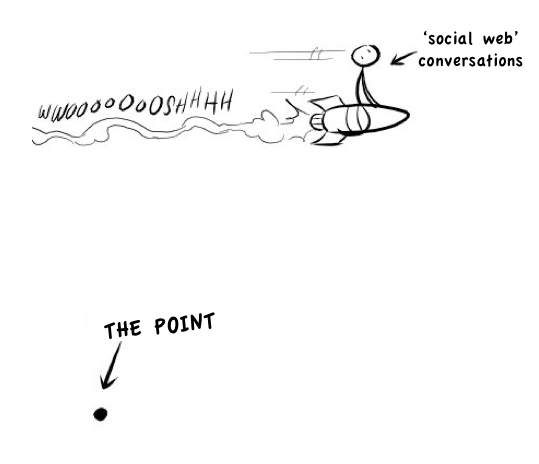
When it comes to today’s marketplace, it’s clear that digital has impacted the landscape dramatically. Let’s be clear however, social media is low hanging fruit. The opportunity is greater when acknowledging the significance of social’s biology and navigating the shifting dynamics beneath the surface.